When night falls, narrated stories often become that extra bit of comfort before bedtime.
Ad
I know how hard it can be to get a child to sleep, especially when all you want is a few minutes of silence at the end of the day.
Narrated stories come in exactly at that moment, when everyone is tired and the sleep routine turns into a daily challenge.
Anyone who lives with children knows that bedtime isn’t always peaceful.
There’s the request for water, the light that has to stay on, “just one more story,” and that fear that appears out of nowhere.
Little by little, I realized that creating a predictable and comforting atmosphere made all the difference.
That’s how audio stories started to gain space in our home. Not as a magical solution, but as real support to turn nighttime into a calmer, safer, and more affectionate moment.

Why Narrated Stories Help Children Sleep Better
Narrated stories work because they reduce visual stimulation and invite the body into rest mode.
The child doesn’t need to react, touch, or focus on a thousand things at once, they just listen.
A steady, gentle voice helps regulate breathing and reduce agitation.
This is very different from cartoons or videos, which keep the brain alert even when they seem “calm.”
Another important point is the sense of emotional safety. When a child associates a story with bedtime, the body understands that this is a protected, predictable, and peaceful space.
In addition, stories activate imagination in a gentle way, without scares or information overload.
This helps reduce anxiety, racing thoughts, and even small nighttime fears.
With that in mind, we carefully selected some apps worth checking out.
Audible App

Audible isn’t exclusively for children, but it adapts very well to kids’ sleep routines.
It works like a large audio library, with classic tales, modern children’s stories, and content designed to relax.
The experience is usually very pleasant thanks to the professional quality of the narrations.
Voices are well chosen, the pace is balanced, and this helps children stay engaged without getting overstimulated.
Key features that help at bedtime:
- Narrated children’s stories with gentle voices
- Sleep Timer so the audio turns off automatically
- Kids profile with age appropriate content
- Offline listening
- Relaxing sounds and calm bedtime stories
Another positive point is that Audible grows with the child. The same app can be used for short stories in early childhood and later for longer audiobooks.
The Premium Plus version gives access to the full catalog and monthly credits, with plans starting around $7.99, depending on the option chosen.
Storytel App

Storytel follows a similar line to the previous app, but with a different twist: it allows you to listen or read the same story.
For some families, this helps a lot, especially with children who already recognize letters.
The app includes a well organized kids mode, where only child appropriate stories are shown.
This makes bedtime much easier, when no one wants to waste time searching.
What families usually like about Storytel:
- Kids mode with parental controls
- Short and long stories for different ages
- Built in Sleep Timer
- Downloadable stories
- Simple, intuitive interface
Another difference is the variety of languages and styles.
You can choose calmer stories on restless nights or something a bit more engaging when the child is still winding down.
Storytel works on a premium subscription, with prices that may vary depending on country and region.
Storybook App

Here, the proposal changes completely. Storybook was created specifically for children’s sleep time and to strengthen the bond between adult and child.
It goes beyond narrated stories and works with relaxation as a whole.
It’s an app designed to slow the body down, calm the mind, and create connection.
What Storybook offers:
- Bedtime narrated stories with comforting messages
- Guided relaxation and children’s meditations
- Positive affirmations for day and night
- Soft music and calming sounds
- Simple gratitude and prayer exercises
- Content created by specialists
The focus isn’t just on making the child sleep, but on helping them feel safe, confident, and calm.
Many activities are designed to be done together with an adult, creating a special moment before bedtime.
Storybook offers a premium version with an annual plan around $59.99 and a monthly plan around $14.99, plus other options. Prices may vary by region.
What is the Ideal Age to Use These Apps?
Narrated stories can be used from an early age, with adaptations.
For younger children, short stories, simple language, and slow narration usually work best.
From around age 2 or 3, children begin to form a bond with the story and understand that this moment is part of the sleep routine.
For older children, stories can evolve, but a calm tone remains essential.
The most important thing is to observe the child’s reaction, not follow rigid rules.
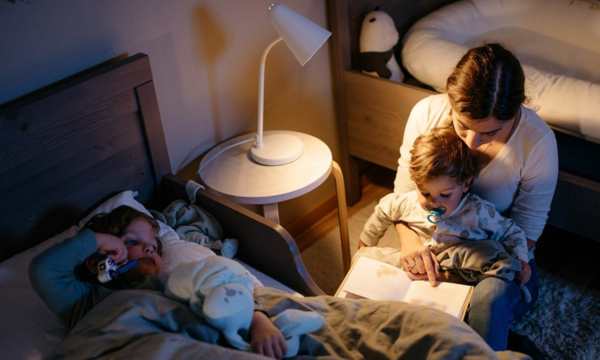
How to Include Narrated Stories in a Child’s Sleep Routine
Here, the secret is consistency, not perfection. Stories work best when they become part of a predictable ritual, one the child recognizes without effort.
Dimming the lights, reducing household noise, and choosing the story together already creates a welcoming atmosphere.
The device stays out of sight, and the focus is only on the audio, without distractions.
This simple moment helps the body slow down and the mind calm. The story becomes a transition signal between a busy day and rest.
Over time, everything fits naturally: the story starts, the body gets the message, and sleep becomes a lighter process, for the child and for the caregiver too.
Tips to Make Bedtime Calmer with Stories
Some details make all the difference when using stories to calm down before sleep:
- Choose calm paced stories, with gentle narration and few stimuli.
- Always use the Sleep Timer so the audio stops on its own after the child falls asleep.
- Repeat favorite stories, predictability often calms more than constant novelty.
- Keep the volume low and steady, creating a peaceful sound environment.
- Treat the moment as connection time, not an obligation.
Narrated stories aren’t magic, but they completely change the nighttime atmosphere.
They help make the environment calmer, more predictable, and safer, exactly what children need to relax.
If you’re tired, out of ideas, and needing a little extra help, these apps can become true allies in your routine.
The secret is to test, adjust to your family’s style, and gently notice what works best for you.