Driver safety starts before turning on the car, especially on long trips.
Ad
Apps help with planning, but they do not replace attention, rest, and responsibility.
Spending Hours on the Road? See How to Prepare

A long trip requires more than choosing the destination and entering the address into the GPS.
Before leaving, check:
- Fuel and range
- Tire conditions
- Vehicle documents
- Weather forecast
- Stopping points
- Alternative routes
- Road conditions
Also avoid starting a long trip already tired or sleepy.
Fatigue can impair attention, perception, and the ability to make decisions quickly.
| Before leaving | Why check |
|---|---|
| Tires | Reduce risks related to vehicle conditions |
| Fuel | Avoid looking for a gas station at an inconvenient time |
| Route | Helps anticipate detours and stops |
| Weather | Allows you to consider adverse conditions |
| Rest | Helps maintain attention during the trip |
When it comes to driver safety, prevention is always better than solving problems on the road.
Hammer: Truck GPS & Maps App
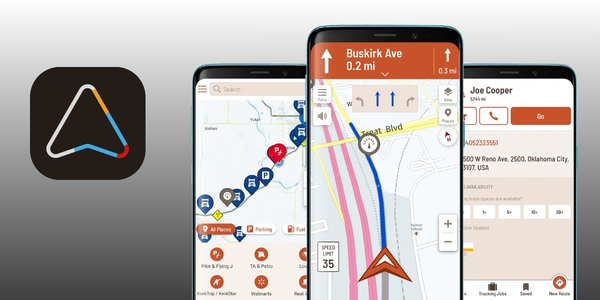
The Hammer: Truck GPS & Maps was developed especially for drivers.
The app offers navigation for commercial vehicles, considering height, weight, length, and number of axles.
Hammer calculates routes and helps avoid restrictions, low bridges, and obstacles.
Among the available features are:
- Offline maps
- Speed limit alerts
- Weigh station information
- Parking
- Lane guidance
- Route recalculation
- Traffic and weather information
What about the premium version?
Hammer offers premium plans starting at US$ 4.99, as well as in app purchases.
Trucker Path App
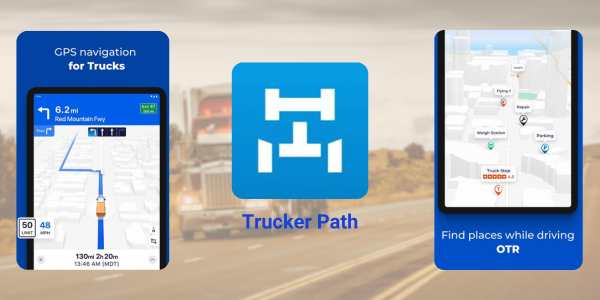
The Trucker Path brings together navigation, road information, and useful resources for trips.
Among the apps for driver safety, it stands out for its information for those who spend hours on the road.
The app offers features such as routes, parking availability, rest stops, and alerts.
Some useful tools include:
- Parking availability
- Nearby location alerts
- Offline maps
- CarPlay integration
- Fuel planning
- Break related reminders
For those who work on the road, finding a suitable place to stop can make a difference in driver safety.
What about the premium version?
Trucker Path offers paid plans with additional features, providing more tools for drivers who spend long hours on the road.
Among them are Gold and Diamond, with differences in features, with prices starting at US$ 1.99.
OsmAnd App
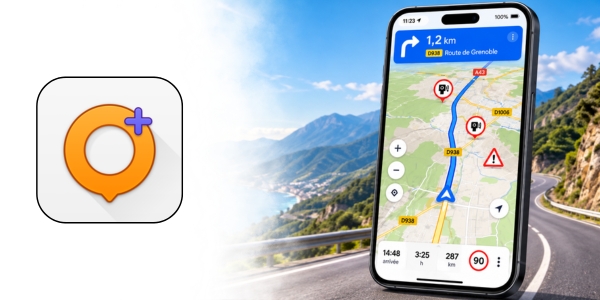
The OsmAnd is a navigation app known mainly for its offline maps and customization options.
The app offers turn by turn navigation, voice guidance, traffic information, and lane guidance.
One of its advantages is being able to use maps and navigation features even when an internet connection is not available.
Among the features are:
- Offline maps
- Voice navigation
- Lane guidance
- Traffic alerts
- Route planning
- Navigation using planned routes
- Settings synchronization
Having the route offline helps in areas where the internet signal disappears exactly when you need it most.
What about the premium version?
OsmAnd has Maps+ and OsmAnd Pro, with additional features.
Current prices include OsmAnd Pro monthly for US$ 5.99 and Pro annually for US$ 39.99.
Features and prices may change depending on the platform, so it is worth checking the available offer before subscribing.
How to Identify Signs of Driver Fatigue
No app should convince you to keep driving when your body is asking for rest, especially during a long trip.
Driver safety is compromised when fatigue reduces attention, concentration, and reaction ability.
Some signs deserve immediate attention:
- Frequent yawning
- Heavy eyelids
- Difficulty keeping your eyes focused
- Disconnected thoughts
- Forgetting the last few miles traveled
- Missing exits or signs
- Difficulty keeping your head up
- Drifting out of the lane
- Irritability or restlessness
These signs are recognized by NIOSH, which is affiliated with the CDC, as indicators of drowsy driving.
If you notice these symptoms, do not try to solve everything by turning up the music or opening the window.
The safest action is to stop in a suitable location and rest.
| Warning sign | What to do |
|---|---|
| Repeated yawning | Look for a safe place to stop |
| Heavy eyes | Stop driving |
| Loss of concentration | Take a break |
| Forgetting the route | Do not continue driving while sleepy |
| Leaving the lane | Stop as soon as there is a safe place |
Remember, driver safety should come before rushing to reach your destination.
Why Breaks and Rest Prevent Accidents
Driving for many hours requires constant attention, and this concentration can decrease as fatigue increases.
Breaks help the driver:
- Recover attention and get back behind the wheel more focused
- Rest the eyes after many hours of watching the road
- Stretch the body and relieve tension caused by sitting
- Drink water to maintain good hydration during the trip
- Have a meal when it is the appropriate time
- Assess their own level of fatigue before continuing
- Resume the trip with more energy and renewed attention
No app, GPS, or alert can replace one simple decision: if you are tired, stop and rest.
This may be one of the most important choices for protecting driver safety during any trip.
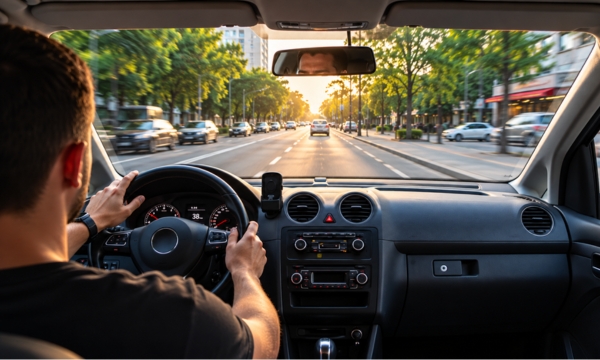
Precautions when Driving at Night
Driving at night requires extra attention, especially on poorly lit roads.
Driver safety can be affected by reduced visibility and accumulated fatigue throughout the day.
Some precautions can help make the journey safer:
- Reduce your speed when visibility is limited.
- Keep the headlights and taillights clean and working properly.
- Avoid looking directly at the headlights of oncoming vehicles.
- Increase the distance from the vehicle ahead.
- Watch out for pedestrians, animals, and obstacles on the road.
- If you are sleepy, stop in a safe location and rest.
It is also worth checking road conditions before leaving and planning possible stopping points.
Conclusion
Taking care of driver safety starts with simple choices before and during the trip, especially on longer journeys.
Apps can help with planning and navigation, but they never replace attention, rest, and responsible driving.
If your body asks for a break, stop and rest, even if you still have a few miles to go.
In the end, arriving safely at your destination should always be more important than arriving quickly.